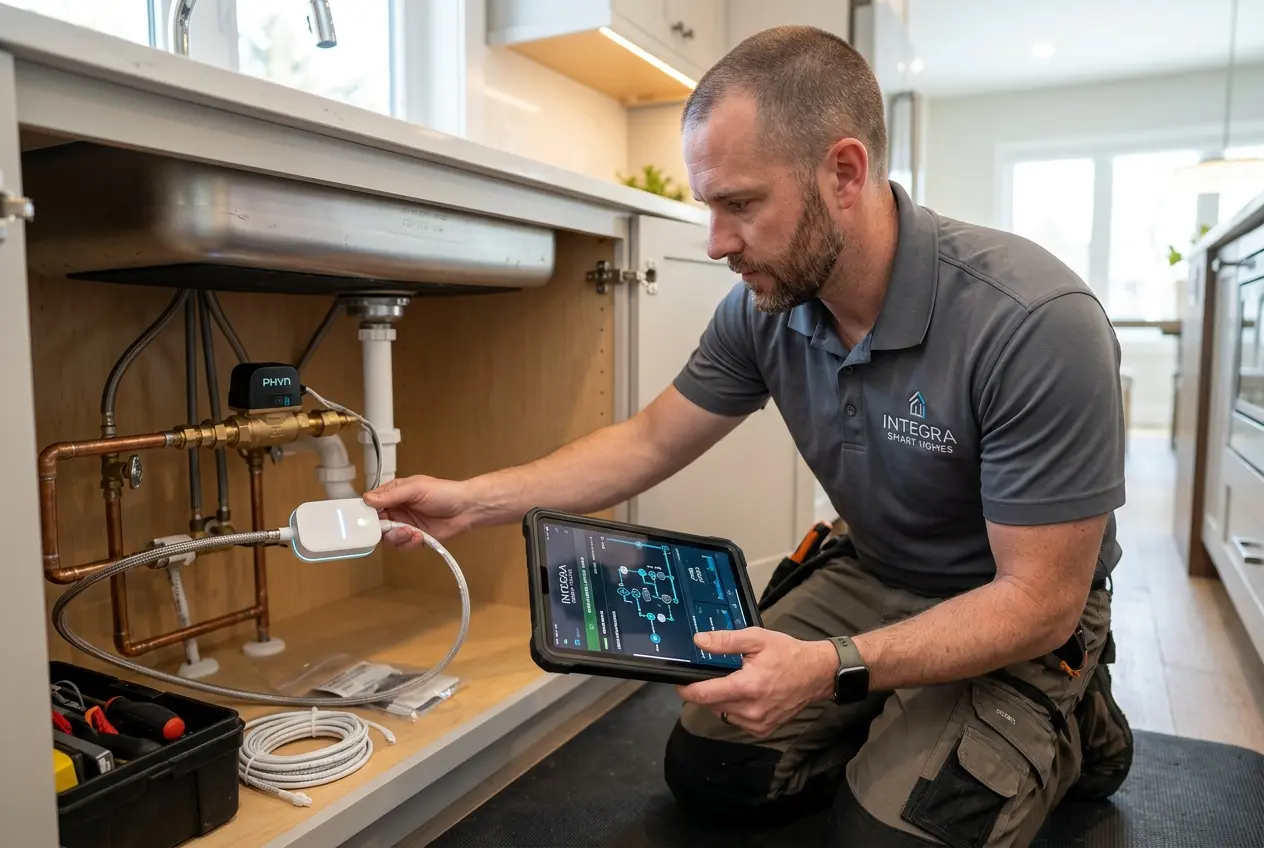
Seattle's average 38 inches of annual rain makes leak detection essential—especially for waterfront properties in Kirkland or basements in Green Lake's high water table areas. Our system goes beyond basic sensors with machine learning that recognizes your home's unique moisture patterns.
We install pressure monitors at key vulnerability points: under floating floors common in mid-century ramblers, behind shower surrounds in tile-heavy Ballard renovations, and along foundation walls prone to seepage during atmospheric rivers. The system differentiates between typical Seattle drizzle infiltration and actual leaks, reducing false alarms. Integration with local weather data provides predictive alerts before heavy rainfall events.
We install pressure monitors at key vulnerability points: under floating floors common in mid-century ramblers, behind shower surrounds in tile-heavy Ballard renovations, and along foundation walls prone to seepage during atmospheric rivers. The system differentiates between typical Seattle drizzle infiltration and actual leaks, reducing false alarms. Integration with local weather data provides predictive alerts before heavy rainfall events.
Our Process
- 01 Step 1: Hydrogeological assessment of your property's water risks (especially crucial for sloped lots in West Seattle)
- 02 Step 2: Strategic sensor placement informed by common Seattle failure points
- 03 Step 3: Machine learning calibration during initial rainy season
- 04 Step 4: Emergency response protocol setup with local plumbers
Benefits
- Differentiates between normal dampness and actual leaks
- Monitors slab foundations common in 1950s ramblers
- Alerts for moss-clogged roof drainage
- Integrates with Seattle's flood warning systems
Frequently Asked Questions
Will this prevent mold in my basement?
While not a mold remediation service, our systems catch humidity spikes early—particularly valuable for daylight basements common in Queen Anne's hillside homes.
How does it handle power outages during storms?
All sensors have 72-hour battery backup, and we recommend pairing with whole-home generators—a popular choice in windstorm-prone Magnolia.