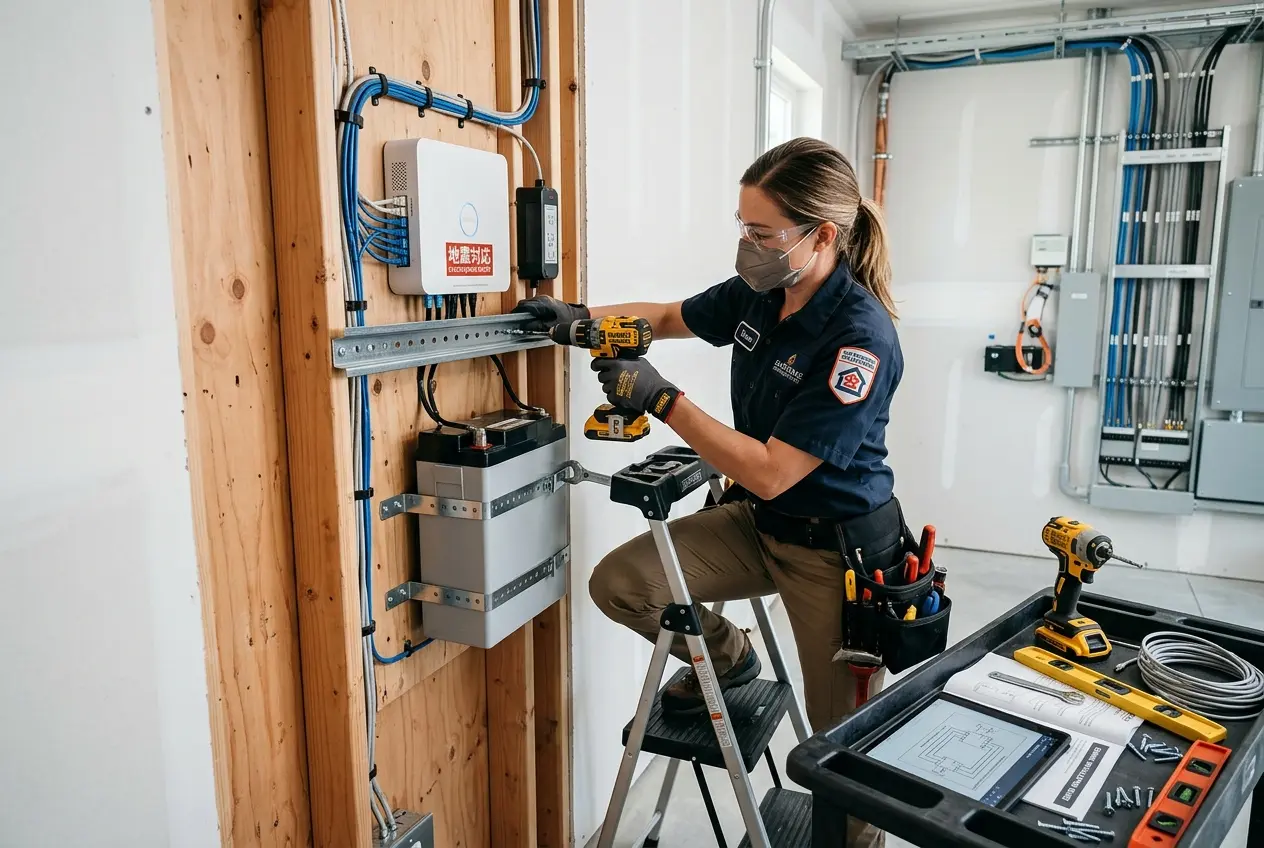
Most security systems fail when the Cascadia fault slips. We engineer solutions that maintain protection during and after seismic events—a critical need for Seattle's soft-story apartments and unreinforced masonry buildings.
Our approach includes breakaway camera mounts that prevent collapse hazards, distributed backup power for alarm systems, and post-quake status checks that function even without WiFi. For homes in liquefaction zones like SODO or the Duwamish Valley, we add soil movement sensors that trigger safety protocols. Every installation meets Washington's earthquake preparedness guidelines while blending discreetly with your home's architecture.
Our approach includes breakaway camera mounts that prevent collapse hazards, distributed backup power for alarm systems, and post-quake status checks that function even without WiFi. For homes in liquefaction zones like SODO or the Duwamish Valley, we add soil movement sensors that trigger safety protocols. Every installation meets Washington's earthquake preparedness guidelines while blending discreetly with your home's architecture.
Our Process
- 01 Step 1: Liquefaction zone assessment using King County geological surveys
- 02 Step 2: Structural analysis of your building type (especially crucial for early 1900s brick facades)
- 03 Step 3: Fail-safe system design with multiple redundancy layers
- 04 Step 4: Community network integration for neighborhood alerts
Benefits
- Maintains functionality during 9.0 quakes
- Prevents security devices from becoming falling hazards
- Gas line auto-shutoff integration
- Neighborhood alert network compatibility
Frequently Asked Questions
How do cameras handle power fluctuations during quakes?
We install supercapacitor backups that provide 8 hours of recording—enough to capture post-event activity until power stabilizes.
Can this retrofit to my 1970s split-level?
Absolutely—we specialize in seismic upgrades for the boxy ramblers common in Shoreline and Lake Forest Park.