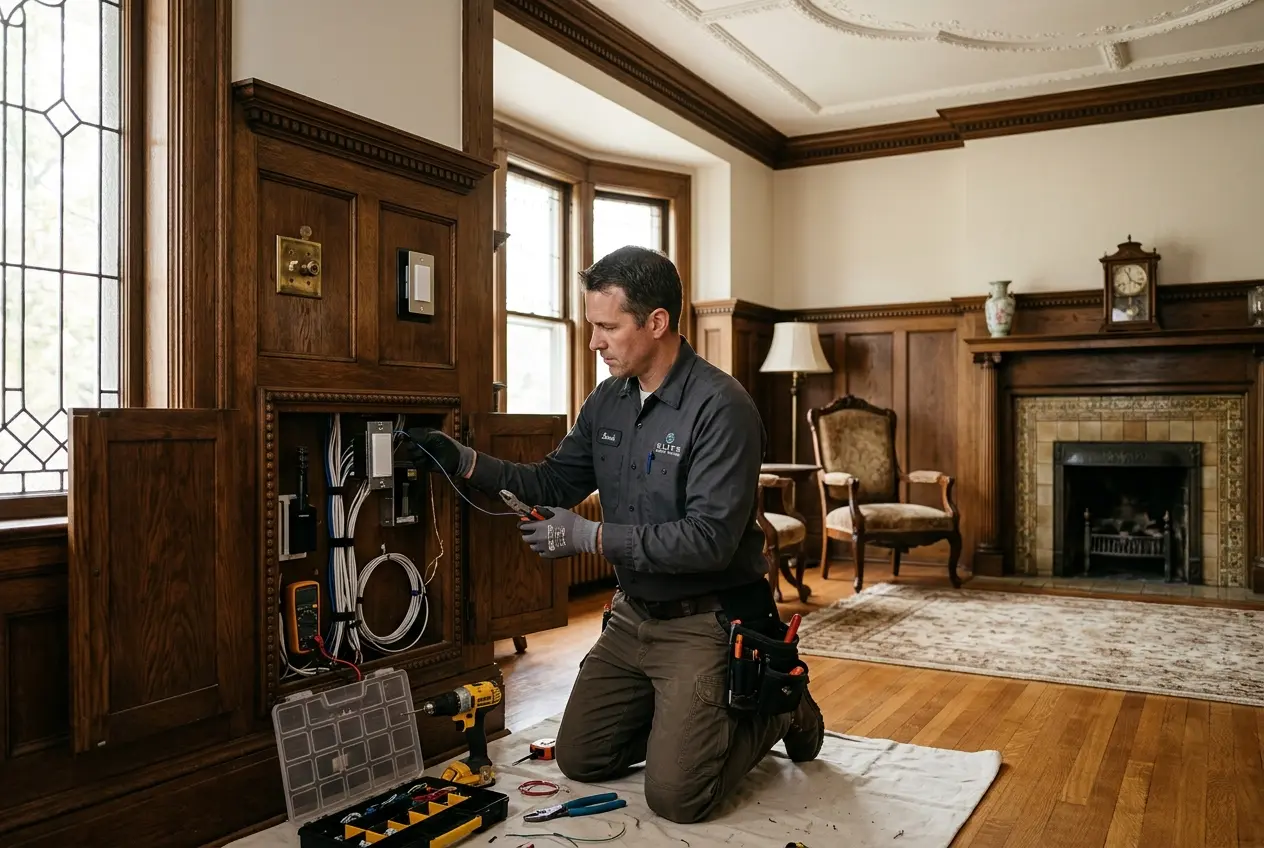
Preserving the character of Seattle's historic districts while adding smart functionality requires specialized expertise. We've perfected subtle installations for Tudor revivals in Broadmoor, Colonial Revivals in Montlake, and of course the iconic Craftsman bungalows found from Phinney Ridge to Columbia City.
Our techniques include custom millwork to conceal components in original built-ins, pressure-sensitive floor mats disguised under vintage rugs, and ultrasonic sensors that don't require drilling into century-old trim. We source period-appropriate materials for visible elements—like switch plates matching 1920s porcelain fixtures. Every project begins with thorough documentation for landmark compliance, a process we know well from working with the Seattle Historic Preservation Office.
Our techniques include custom millwork to conceal components in original built-ins, pressure-sensitive floor mats disguised under vintage rugs, and ultrasonic sensors that don't require drilling into century-old trim. We source period-appropriate materials for visible elements—like switch plates matching 1920s porcelain fixtures. Every project begins with thorough documentation for landmark compliance, a process we know well from working with the Seattle Historic Preservation Office.
Our Process
- 01 Step 1: Architectural review and landmark compliance check
- 02 Step 2: Material matching for visible components (especially crucial for Mission-style homes)
- 03 Step 3: Non-invasive installation planning using original blueprints when available
- 04 Step 4: Preservation-approved concealment strategies
Benefits
- Landmark commission-approved methods
- Preserves original plaster and woodwork
- Custom millwork matching
- Documentation for historic tax credits
Frequently Asked Questions
Can you automate my 1910 pocket doors?
Yes—we use low-profile track motors that maintain the original hardware, a specialty for First Hill's apartment conversions.
How do you hide wiring in lathe-and-plaster walls?
We employ endoscopic techniques to thread wires through existing voids—no destructive chasing needed for your Wallingford classic.